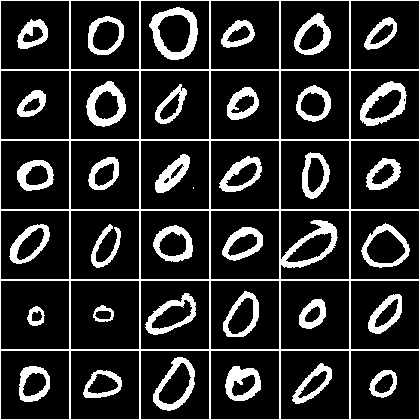
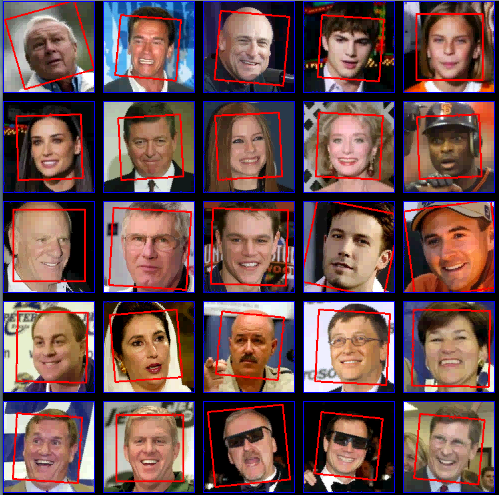
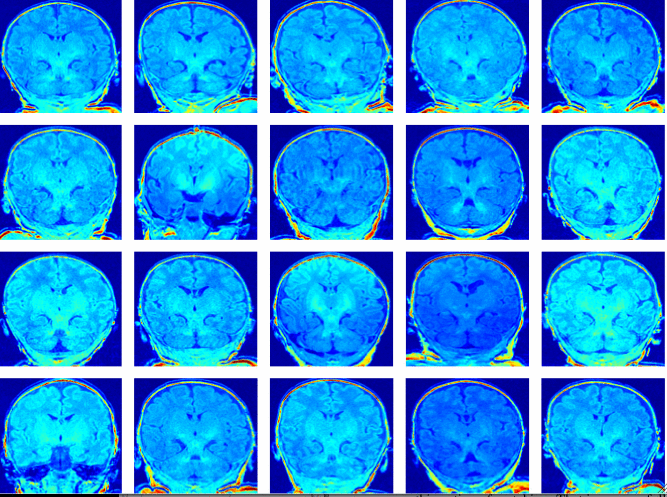
Congealing is an algorithm for
the joint alignment of a set of images. This notion of "alignment" can
be construed very broadly. It includes various types of spatial
alignment, aligning images under, say, rotation and translation. The
binary digits above are aligned by using the set of affine transformations
to transform each zero until it matches the others best. The set of faces above are
aligned by using similarity transformations. (Mouse over the images to
see the alignment happen.) But congealing can also refer to the removal of other forms of non-spatial
variability, like brightness transformations, that make a set of
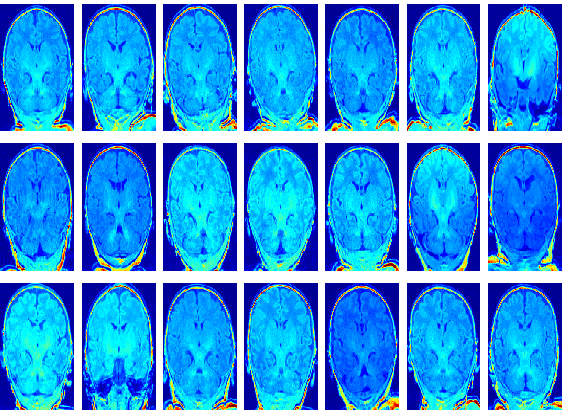
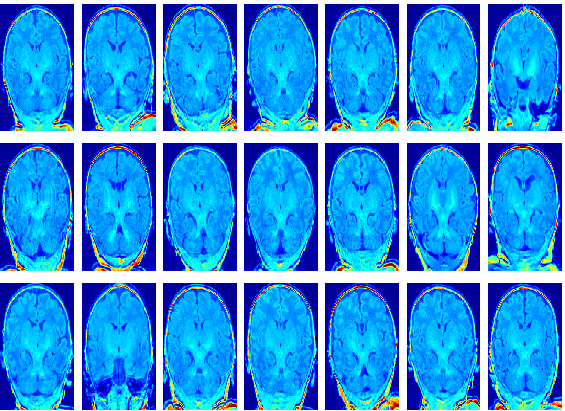
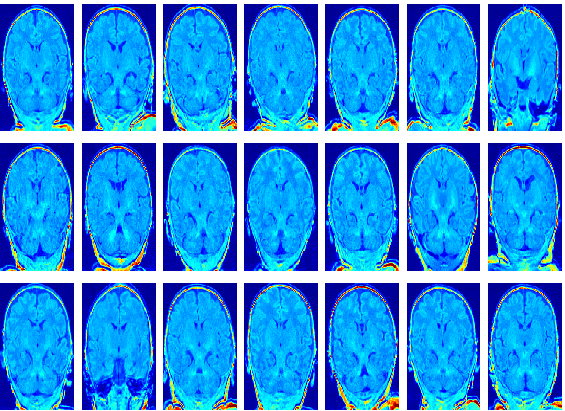
images different. The magnetic resonance brain images above are being "aligned" with
respect to a set of smooth brightness transformations. This can help eliminate
artifacts that may cause the erroneous automatic interpretation of the images.
Congealing demo code.
You can download code for congealing. This code runs congealing on a set of handwritten zeros. I hope to put more comprehensive code on the web at some point, but this will let you see how it works.
Congealing download 1.0: Tar ball
Congealing Papers
The following publications are related to congealing.
(Best Paper Award) Lilla Zollei, Erik Learned-Miller, Eric Grimson and William Wells, (2005)
Efficient population registration of 3D data.Workshop on Computer Vision for Biomedical Image Applications: Current Techniques and Future Trends, at the International Conference of Computer Vision (ICCV).
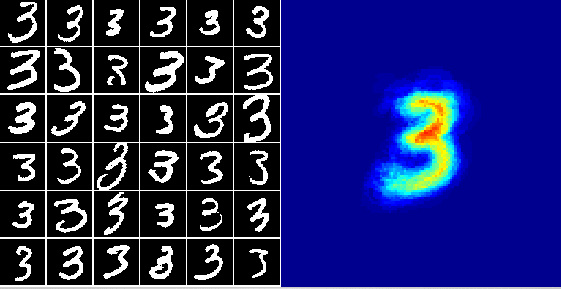
This movie shows a set of threes from the NIST database being congealed. (12 Megabytes).
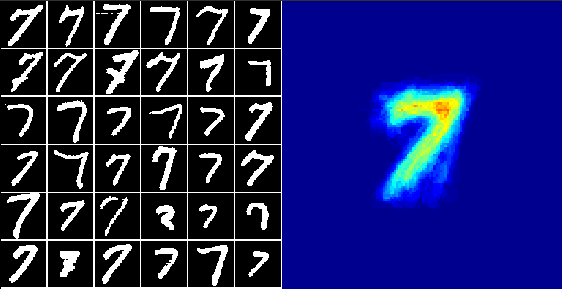
This movie shows a set of sevens being congealed. (12 Megabytes)
Congealing Images
Move your mouse over the images below to see the results of congealing on the images.
This set of images is a set of infant MR images before bias correction.
This set of images is the same set of infant MR images after our bias correction method.
Finally, the set below is a set that have been corrected using a single image method. Notice the repression of the developing white matter in the mid-brain (butterfly-like shapes).
What if I have other questions about congealing?
If you have questions about congelaing, please email me at
elm"at"cs"dot"umass"dot"edu