1. Local Diagram
Start with partial information: token windows, evidence slices, claims, skills, or policy states.
Kan Extension Transformers
A Kan Extension Transformer has two tutorial roles. It can extend local information into a broader context, and it can pull proposed extensions back against constraints. That left/right pattern is the common thread connecting language modeling, Odyssey foundries, TICKET admission, and UDL.
Before looking at perplexity curves, the audience needs the categorical picture. KET is not just another attention variant; it is a way of moving information through diagrams of contexts while preserving the maps that make those contexts meaningful.
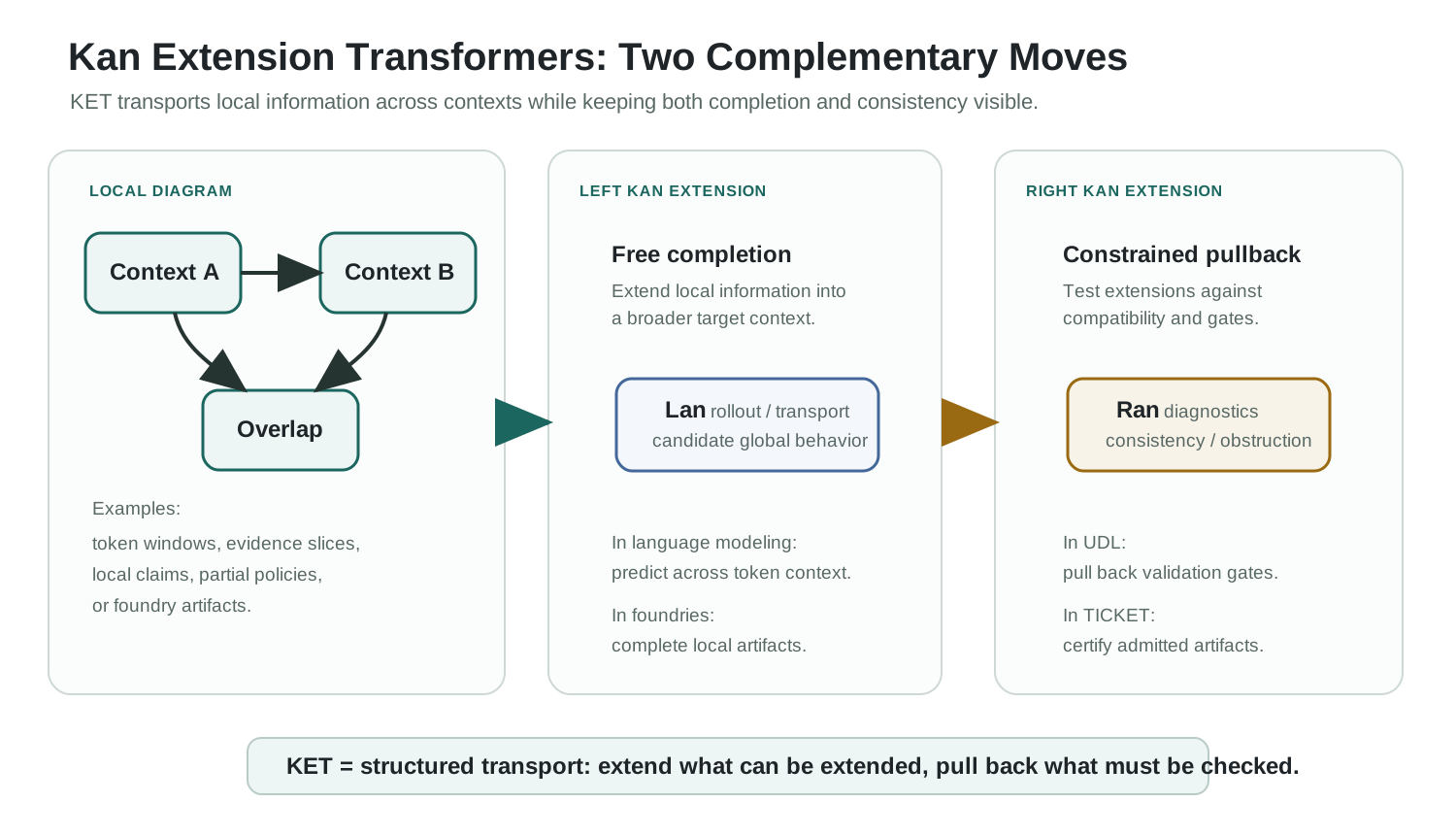
Start with partial information: token windows, evidence slices, claims, skills, or policy states.
Extend local information into a target context: prediction, rollout, completion, synthesis, or foundry construction.
Pull the proposed extension back through constraints: validation gates, evidence maps, and obstruction checks.
The next drilldown makes the idea concrete with language modeling. There, local contexts are token neighborhoods and the experiment asks whether KET-style transport improves predictive behavior.
KET becomes structured completion from local artifacts into durable foundry state.
Kan-extension checks certify that admitted artifacts preserve evidence, scope, and obstruction signals.
Rollout acts like left Kan extension; pullback diagnostics act like right Kan consistency.