Representation
How intelligent systems construct useful coordinates, abstractions, and invariants.
Artificial intelligence · Machine learning · Category theory
Over four decades, my work has moved from learning apprentices and autonomous agents to representation discovery, causal inference, categorical AI, and computational creativity. This UMass page preserves that academic trajectory and points toward the questions still unfolding.
Intelligence is not only the minimization of a loss. It is the capacity to build a theory, recognize where that theory fails, and revise the structure through which the world is understood.
A research life in four movements
The methods have changed. The search for learnable structure has remained.
1980s–1990s
Learning apprentices, explanation-based learning, and the question that has endured throughout my work: how can an intelligent system acquire structure rather than merely fit observations?
1990s–2000s
Reinforcement learning, hierarchical decision-making, multi-agent systems, robot learning, and autonomous agents operating under uncertainty.
2000s–2010s
Spectral methods, proto-value functions, manifold learning, transfer, optimization, and the geometry hidden inside high-dimensional decision problems.
2020s–
Categories, causality, trustworthy foundation models, learning from failures of compositionality, infinitesimal creativity, and the discovery of compositional worlds.
Research atlas
My current program asks how explicit mathematical structure can make learning systems more diagnosable, intervenable, and capable of controlled theory change.
How intelligent systems construct useful coordinates, abstractions, and invariants.
How agents learn, plan, and act in uncertain and changing worlds.
How models support intervention, verification, and trustworthy inference.
How a system might diagnose the limits of a theory and construct an admissible extension.
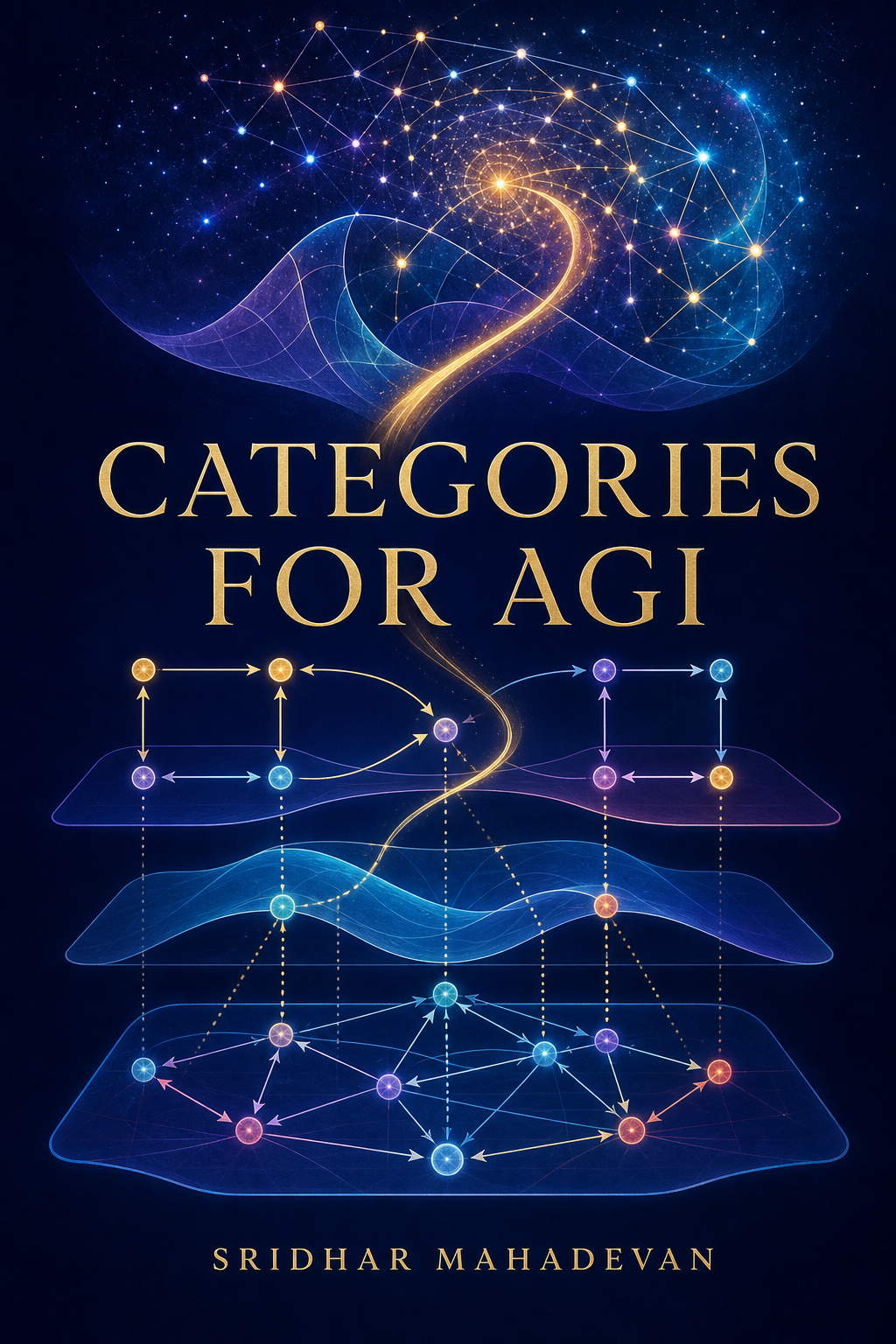
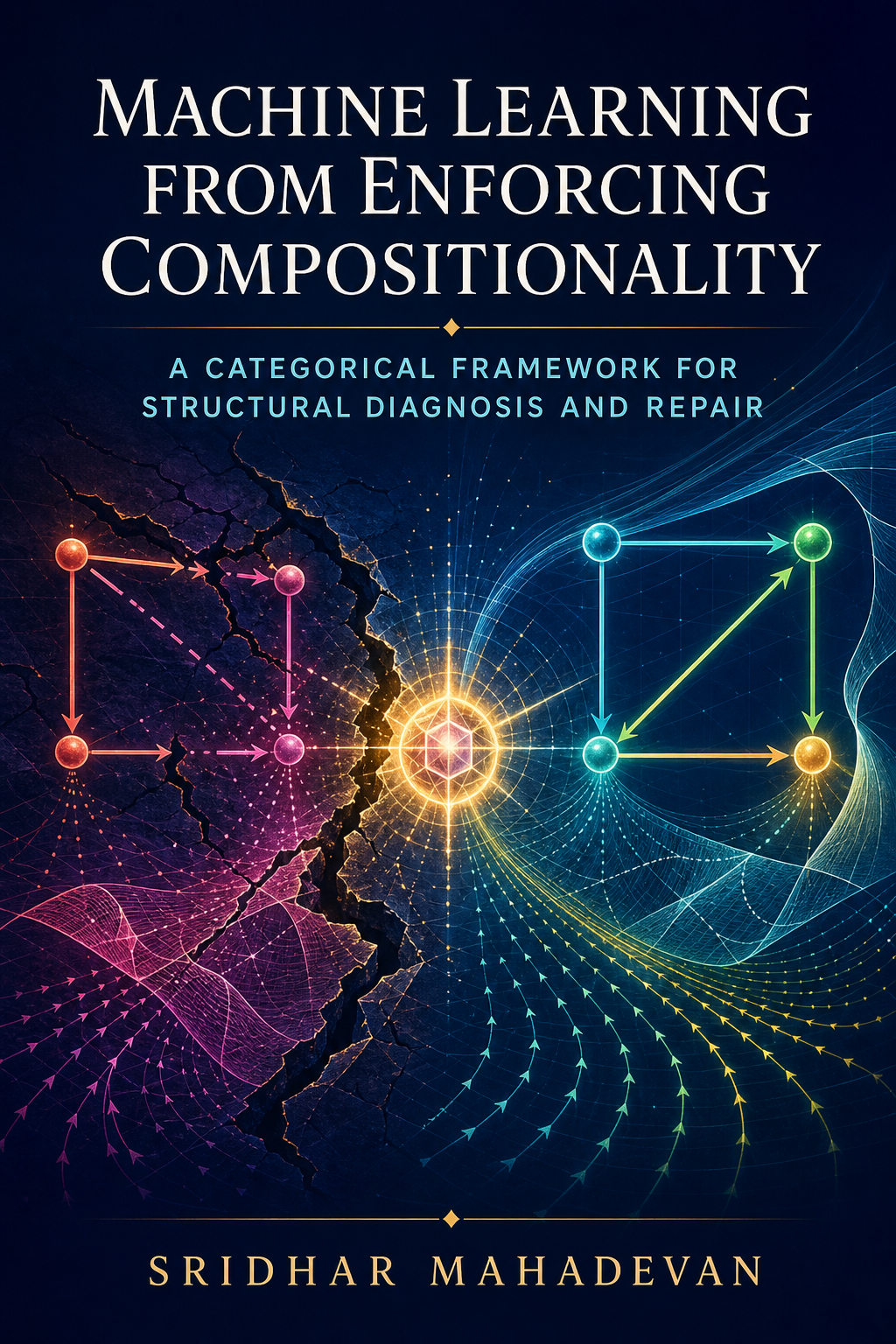
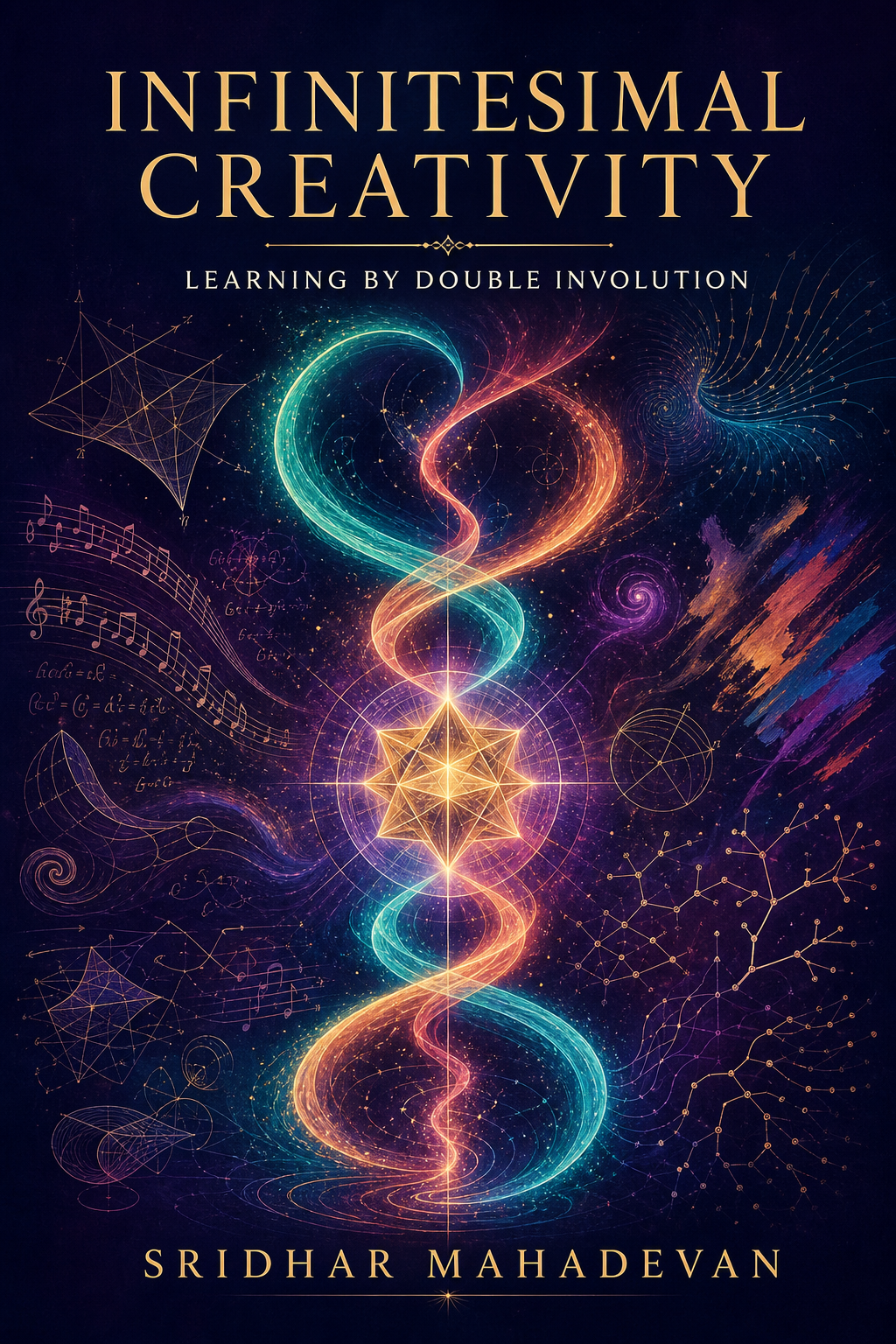
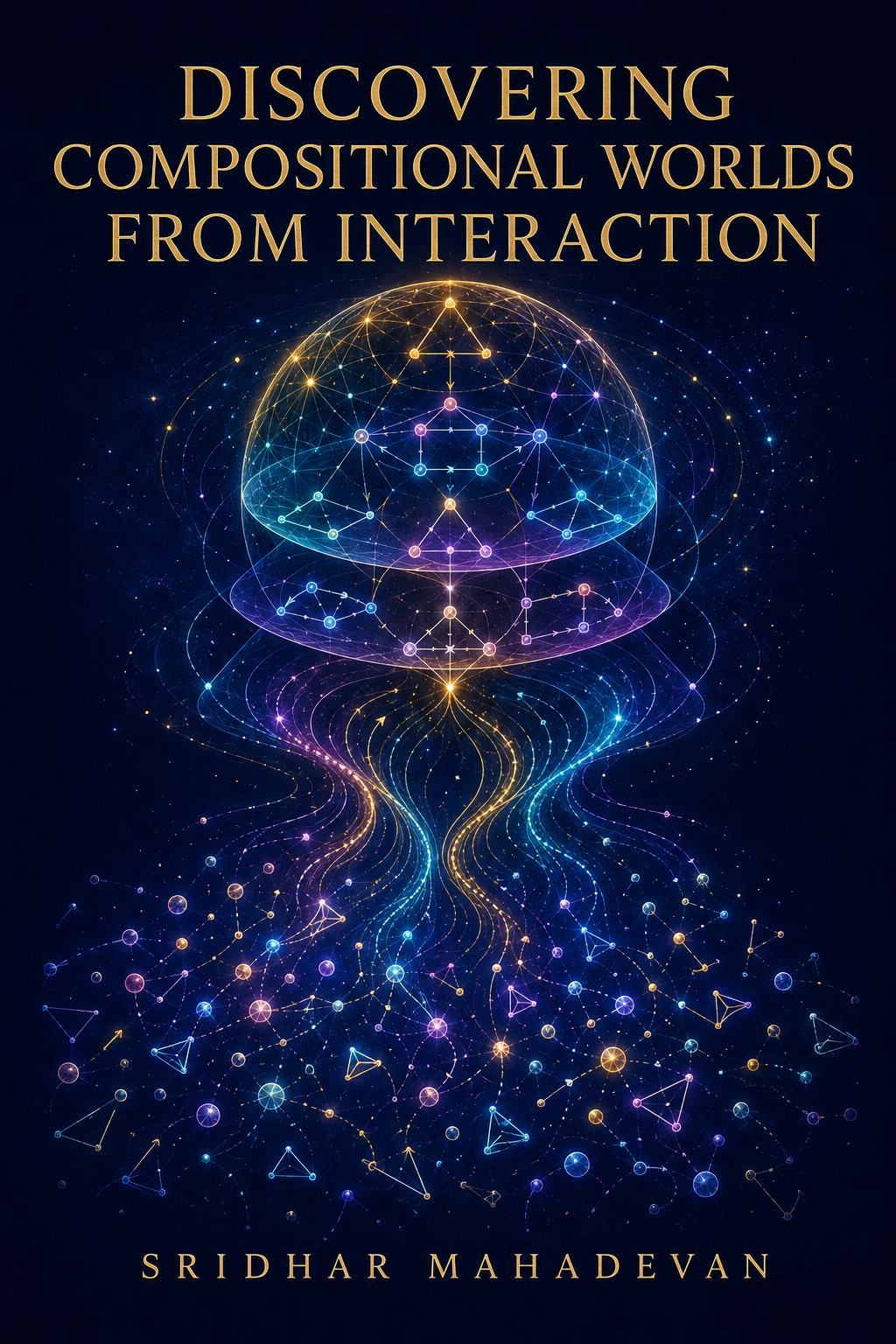
The categorical AI tetralogy
A four-volume arc from the functorial language of cognition and learning by structural repair to infinitesimal creativity and the discovery of compositional worlds.
02 · The learning principle
The UMass academic archive